
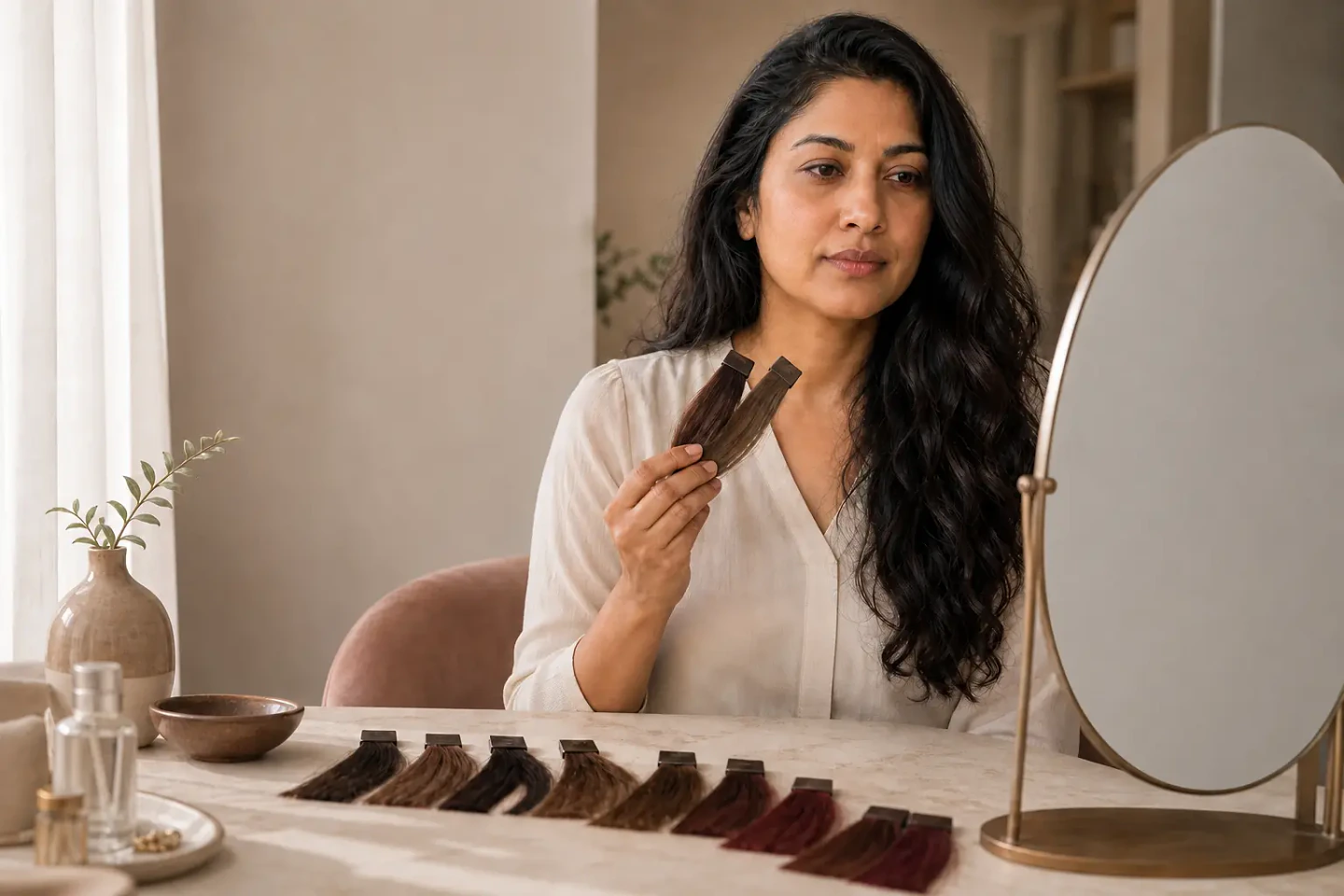
Quick chooser: What change do you want?
| Your goal | Try first | Examples |
|---|---|---|
| A subtle change | Stay close to your natural lightness or darkness; change the tone or add highlights | Soft chocolate, bronde, beige blonde, subtle balayage |
| A brighter or softer look | Go somewhat lighter or add brightness around the face | Honey blonde, caramel highlights, champagne, light copper |
| A richer or more defined look | Go slightly darker or choose a deeper tone | Chestnut, espresso, auburn, soft black |
| A bold change | Create stronger contrast or try a vivid tone | Platinum, bright copper, burgundy, pink, blue, purple |
First decide: lighter, darker, or close to natural?
Look at your natural hair color and choose how large a change you want. Staying close to its current lightness or darkness is usually the easiest visual transition: a brunette might move from neutral brown to chestnut, or add soft caramel highlights, without feeling completely different.
Going lighter can soften the overall look or brighten the face, but the salon work depends on your starting hair. Dark or previously colored hair may need more than one stage. Going darker can add definition and make eyes or brows stand out, although a solid dark result may look flat without tonal variation.
Colorists may call lightness or darkness depth. Contrast simply means how strongly your hair stands out from your skin, brows, and eyes. You can preserve that contrast or change it deliberately.
Then compare warm, cool, and neutral shades
Undertone is the subtle warm, cool, or neutral cast beneath the surface of your skin. It can suggest a useful starting direction, but it is not a diagnosis. Compare shades beside your face in even daylight; phone processing, colored lighting, makeup, tanning, and temporary redness can all change what you see.
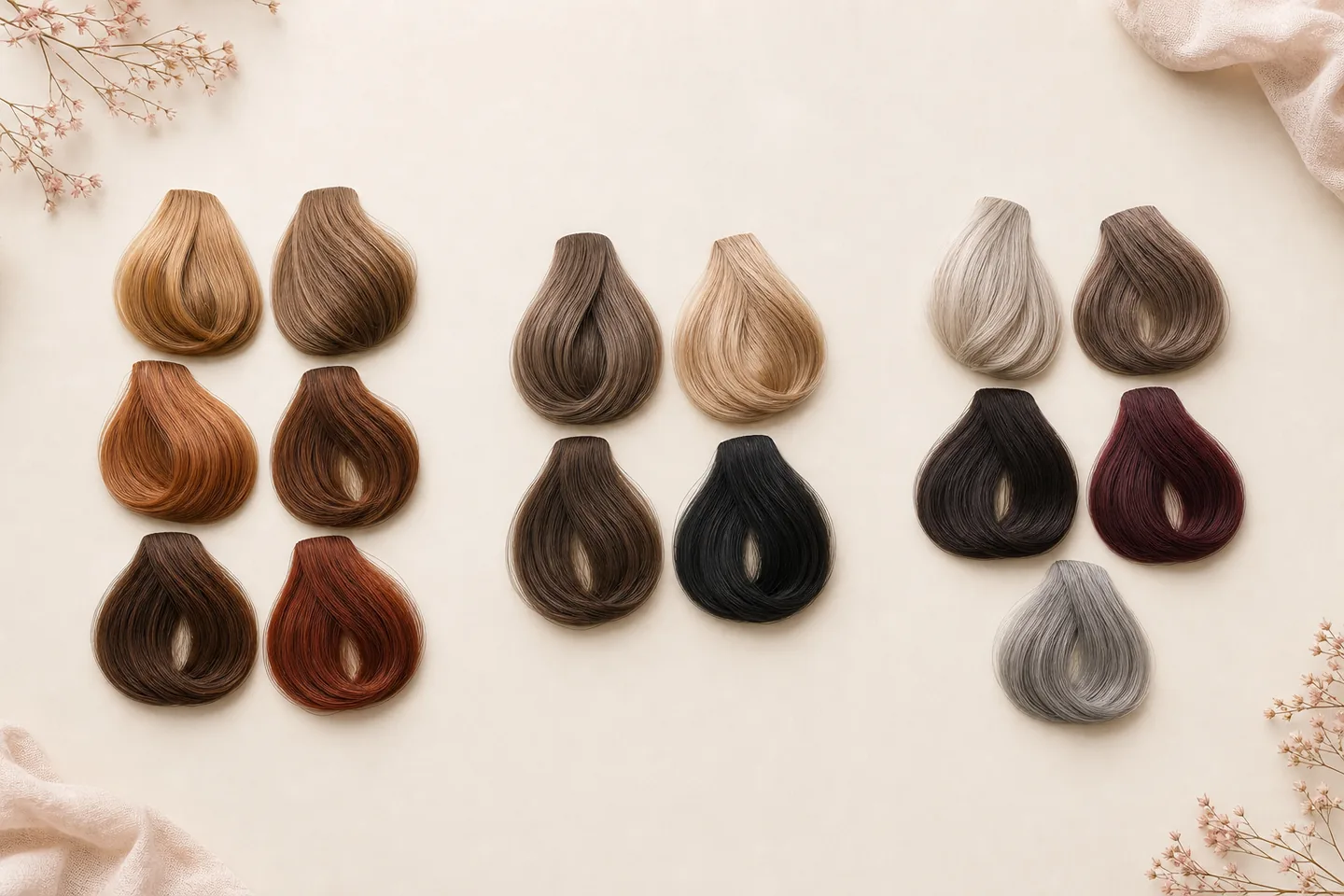
Try warm shades first if...
Try honey blonde, caramel, warm chocolate, chestnut, copper, or auburn. A warm shade may make your skin look brighter and more even rather than unusually yellow or red. It can also add a sunlit effect when your natural coloring feels muted.
Try cool shades first if...
Try beige blonde, ash blonde, mushroom brown, cool espresso, burgundy, or silver. A cool shade may make your complexion look clearer rather than gray or washed out. It can also make unwanted orange tones less noticeable.
Try neutral shades first if...
Both warm and cool options seem convincing, or neither extreme feels quite right. Bronde, beige-gold blonde, neutral brown, soft chocolate, balanced copper-brown, and soft black offer flexibility without leaning strongly in either direction.
Judge the effect around your whole face rather than relying on wrist veins or jewelry. These groups are editing tools, not rules, and you may intentionally prefer a high-contrast shade over the most harmonious one.
Use eyes as a tie-breaker - not a rule
When two shades suit your skin equally well, eye color can help you choose between them. Caramel, copper, and auburn may bring out gold or green in hazel eyes; ash blonde or cool brown can make blue and gray eyes look clearer. Deep brown eyes can support anything from honey blonde to espresso, so choose the effect you prefer. Brows do not need to match your hair exactly, but keeping some relationship between them can make a large change feel more connected.
Rule out shades that do not suit your hair or routine
A flattering photo is only the first filter. Your starting hair determines how safely and predictably a color can be created. The American Academy of Dermatology notes that lightening more than three shades needs stronger peroxide and causes more damage, so a dramatic blonde may require stages or a gentler first goal.
Now remove any finalist that asks for more time, cost, or hair stress than you want. Be honest about how often you will refresh the color and how much visible regrowth you can accept. A slightly less dramatic shade with a softer grow-out is often the choice you will enjoy for longer.
- Starting color: dramatic lightening may require stages, especially from naturally dark hair.
- Dye history: box dye, bleach, henna, and color removers can change what is achievable.
- Condition: fragile or porous hair may need a gentler plan.
- Texture and usual styling: highlight placement should work with the way you normally wear your hair, whether straight, wavy, curly, or coily.
- Upkeep: consider roots, fading, toning, appointments, budget, and grow-out.
- Gray hair: choose between coverage, blending, or an intentional silver transition.
Choose three finalists
- Subtle: close to your natural color, with a different tone or soft dimension.
- Noticeable: one clear change - lighter, darker, warmer, cooler, or more dimensional.
- Bold: the shade you love but feel nervous to try.
Use the same clear, unfiltered photo for all three. Face the camera in soft, even daylight, show your full hair outline, and keep the pose and lighting unchanged. This makes the color the only important difference.

What can - and cannot - a hair-color preview show?
A preview can compare overall color direction, lightness, warmth, coolness, and mood on your face. It can show whether you prefer a deeper root, brighter pieces near the face, or an all-over change. Compare all three images at the same size, rather than judging one enlarged favorite against smaller alternatives.
It cannot predict lift, dye chemistry, fading, hair damage, the number of appointments, or an exact salon result. Screens, cameras, and lighting also affect color. Use your favorite preview as a conversation starter with a professional colorist, who can assess your hair and explain what is realistic.
A short salon and safety note
Show your colorist the preview, say what you like about it, and share your complete dye history. Ask what can be achieved in one appointment and how the shade should fade.
For at-home color, follow every package direction and warning. The US Food and Drug Administration advises a skin patch test before every use, gloves, keeping dye away from the eyes, and never mixing different products. Stop if you have a reaction and contact a healthcare professional.
So, what hair color suits you?
Choose in four steps: decide whether you want lighter, darker, or similar hair; compare warm, cool, and neutral tones; remove options that are unrealistic for your starting hair or upkeep; then compare a subtle, noticeable, and bold finalist on the same photo. The winner should flatter you and fit your real life.
Revised: